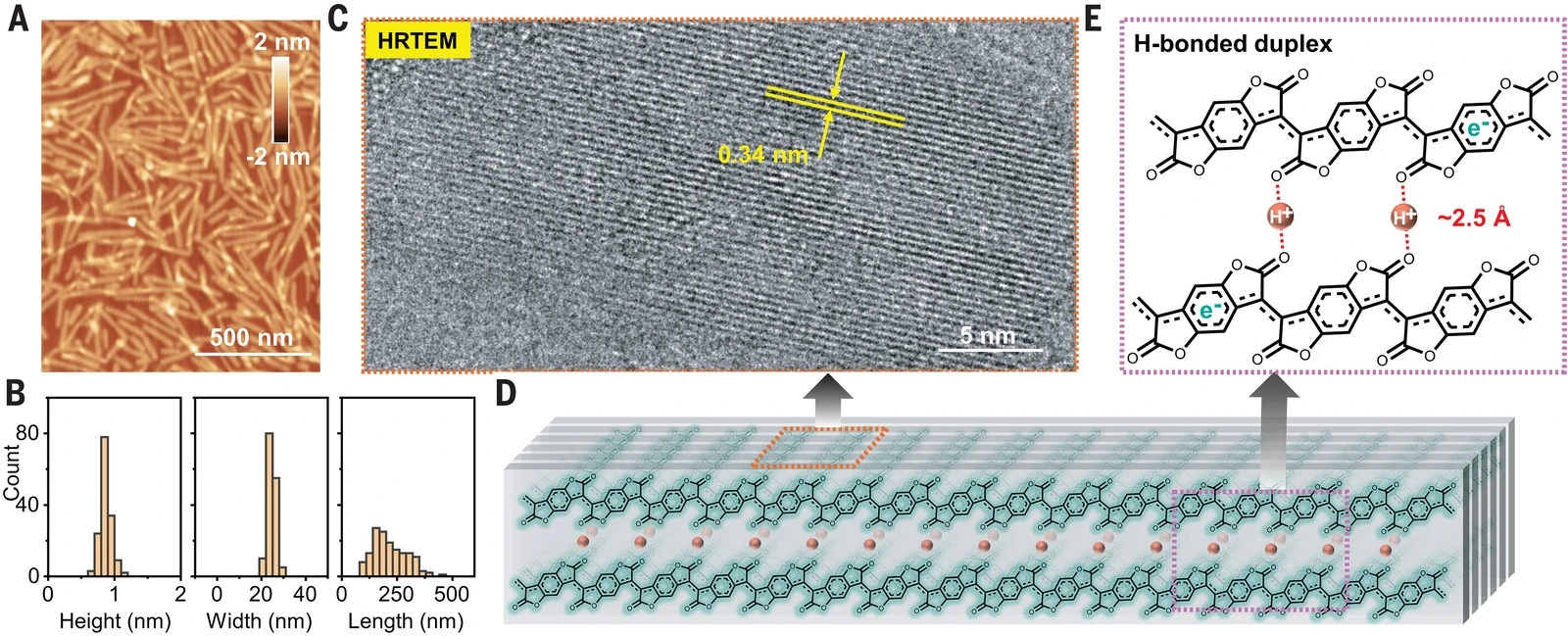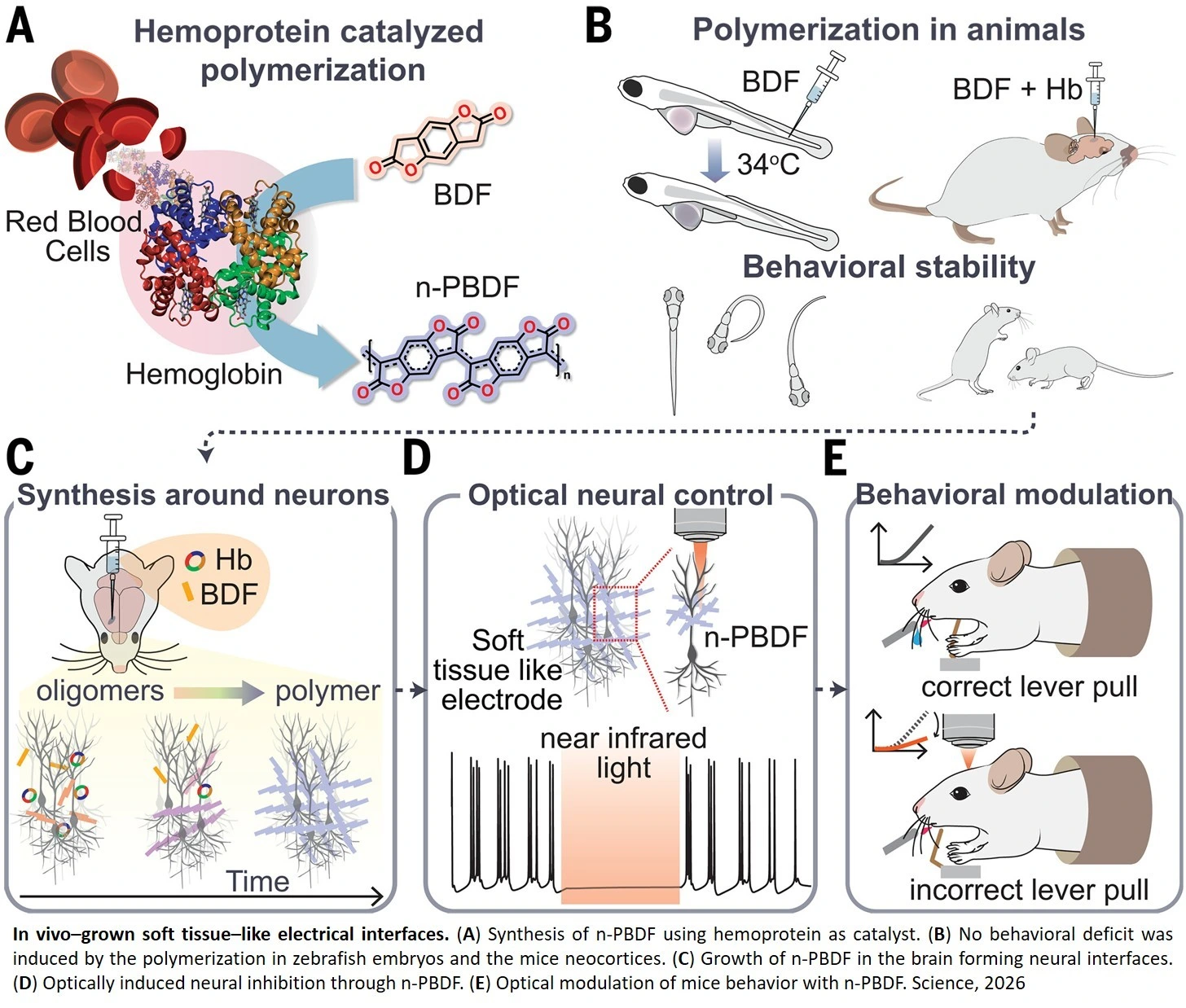


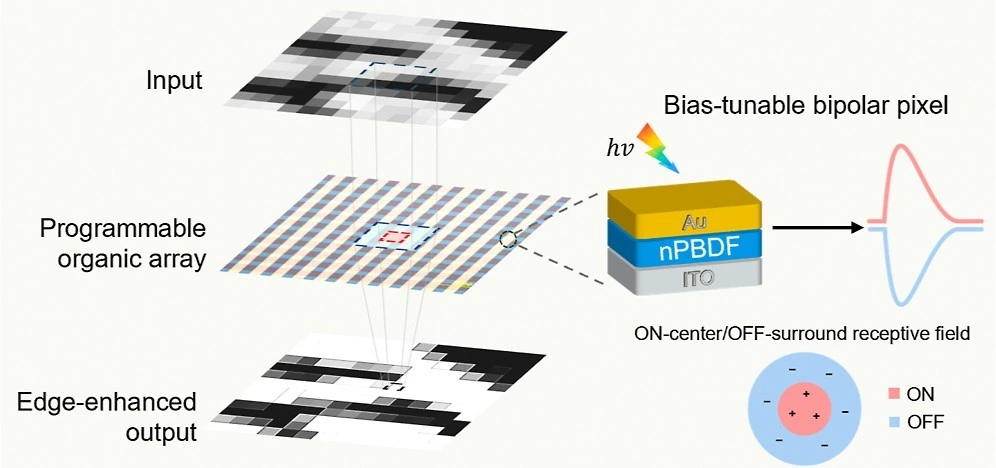
A retina-inspired organic device from the group is published in ACS Nano. The human retina processes vision in three cellular layers: photoreceptors carry out phototransduction, bipolar cells process contrast, and ganglion cells transmit the signals to the brain. Three years ago, an electrochemical transistor that mimics phototransduction was published in Nature Photonics; it works through photon-modulated electrochemical doping below 1 V and has now passed 300 citations. The new device emulates retinal bipolar cells. Built with a vertical two-terminal geometry, asymmetric electrodes and a single layer of n-PBDF, it tunes the polarity of its photoresponse continuously from negative to positive below 0.2 V, reproducing the antagonistic visual encoding behind biological contrast. It switches polarity reversibly over 1,000,000 cycles and stays stable for 78 days in ambient air. Congratulations to Jiao Suo, who carried out most of the work, and all coauthors. The next target is the spike encoding of ganglion cells, toward a fully organic artificial retina that interfaces directly with the brain.