


Center for Living Electronics and Adaptive Neurotherapeutics

Materials that become electronics inside living tissue, to sense, program and heal the nervous system.

CLEAN logo: a brain whose left half is biological and whose right half is a circuit

About CLEAN

The Center for Living Electronics and Adaptive Neurotherapeutics (CLEAN) is a research center at Zhejiang University, working at the intersection of the life sciences, materials science, chemistry, electronic information and medicine. Its goal is to develop a new generation of living electronics and adaptive neurotherapeutics. Instead of only implanting prefabricated electronic devices into the body, the center uses materials chemistry, in situ polymerisation and bioelectronics to let electronic materials form directly inside living tissue, creating soft, stable and dynamically responsive interfaces. The result is electronic materials that do not merely sit in the body but grow within it, coupling to the nervous system so that neural function can be recorded, programmed and, eventually, treated.

The nervous system processes information, learns and regulates the body through ion transport, electron transfer, chemical signalling and network activity. How to build a stable, controllable and functionally meaningful link between artificial electronic materials and a living system, starting from the materials and the chemistry, remains one of the central open questions in bioelectronics, brain science and health. Current neural interfaces connect externally fabricated electrodes to tissue but still face problems with material-tissue mismatch, long-term interface stability, cell-scale control and precise intervention in neural circuits.

CLEAN uses high-performance organic conducting polymers and mixed ionic-electronic conductors as its material basis and “living electronics” as its core scientific paradigm. The center investigates how electronic materials form in situ in the living environment, how they couple functionally to cells and tissue, and the mechanisms by which materials modulate neural function. Drawing on Zhejiang University’s strengths in polymer science, materials, chemistry, electronic information and medicine, CLEAN brings together expertise in living electronic interfaces, cell physiology, neural circuits, neuromorphic intelligence and AI-driven materials research. The resulting platform spans materials design, the construction of living interfaces, mechanistic analysis and the validation of system function.

Host units
Department of Polymer Science and EngineeringInstitute of Fundamental and Transdisciplinary ResearchThe Second Affiliated Hospital, Zhejiang University School of Medicine
Contact
jgmei@zju.edu.cn

Research

The three core research directions form a progression from materials to living function and on to system-level modulation, and the center also explores the potential of related materials for neuromorphic sensing, photo-response and information processing.

  • Living electronic materials and tissue integration

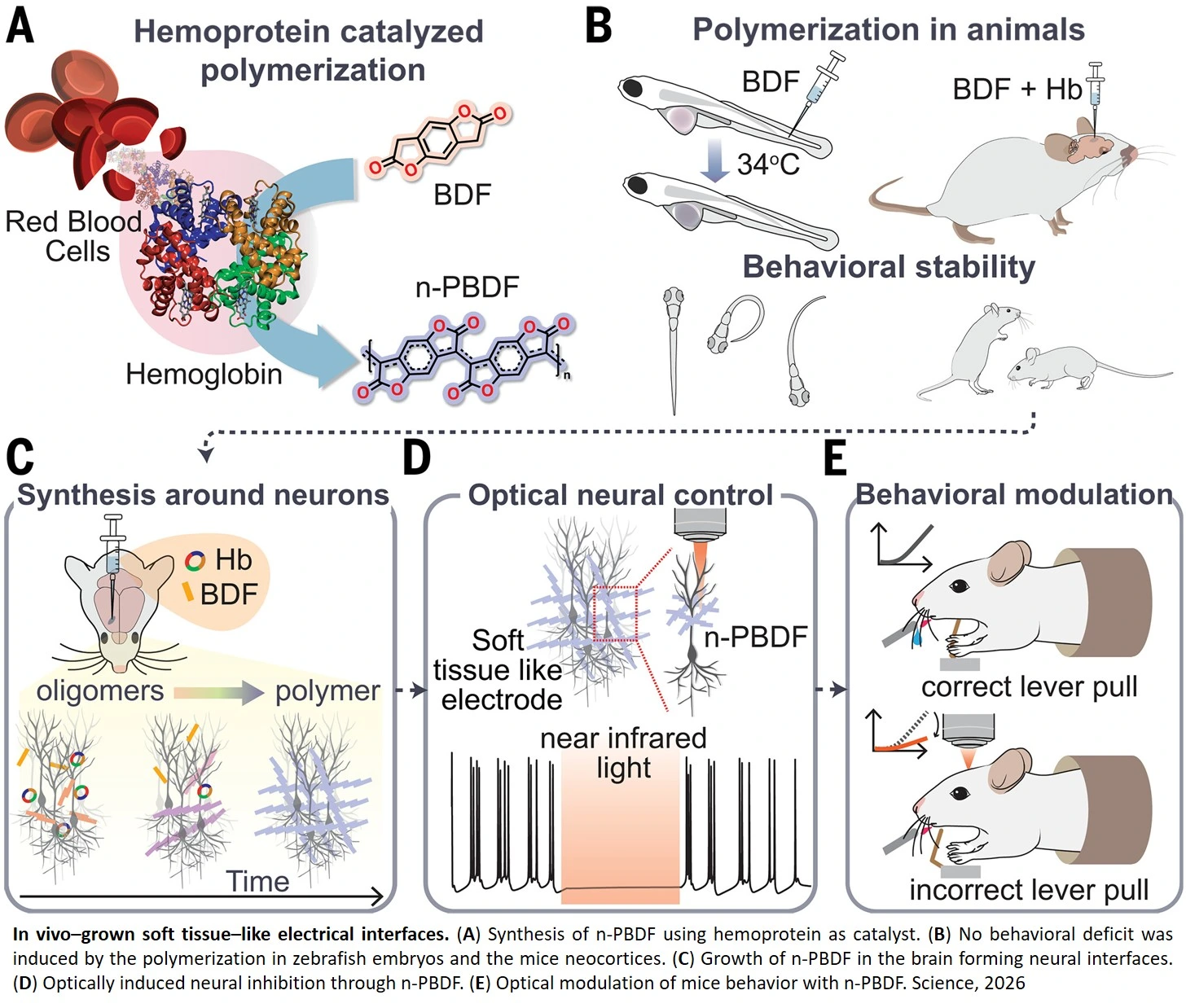
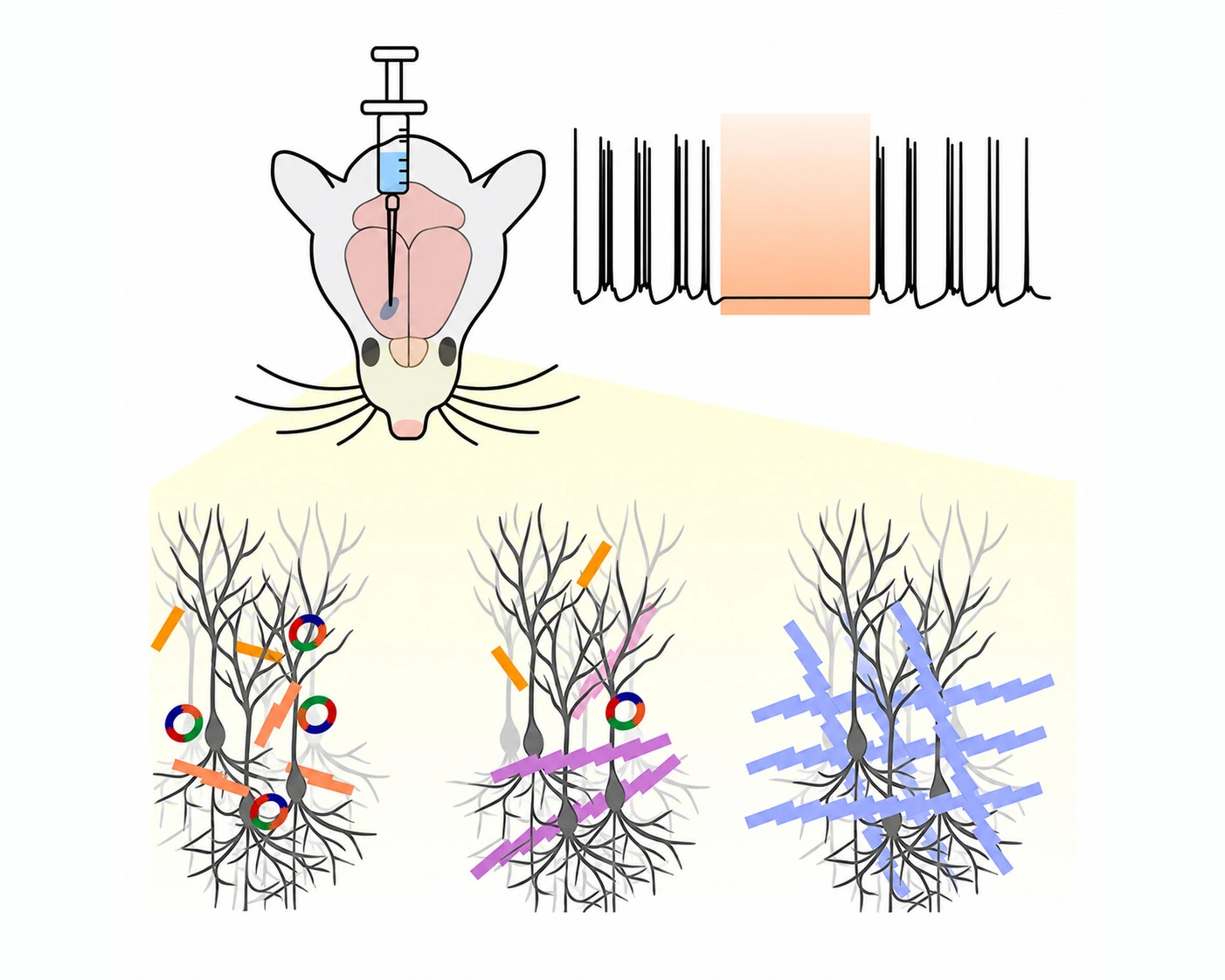
    Schematic from the group's 2026 Science paper: haemoglobin and the monomer BDF injected into the mouse brain grow from oligomers into an n-PBDF polymer network around the neurons, beside a recording trace in which the firing stops during a pulse of light
    • In situ polymerisation reactions and functional materials suited to physiological environments, with a focus on the catalysis, polymerisation and doping that take place there.
    • Electron and ion transport in materials formed in the living body: their structure and transport behaviour, and how composition, structure and function are related.
    • Tissue interface formation, compatibility and stability, and the quantitative relationships between material structure, interface properties, the local physiological environment and the biological response.

    Together, these provide the material and mechanistic basis for building living electronic interfaces.

  • Material-mediated neuromodulation and functional programming

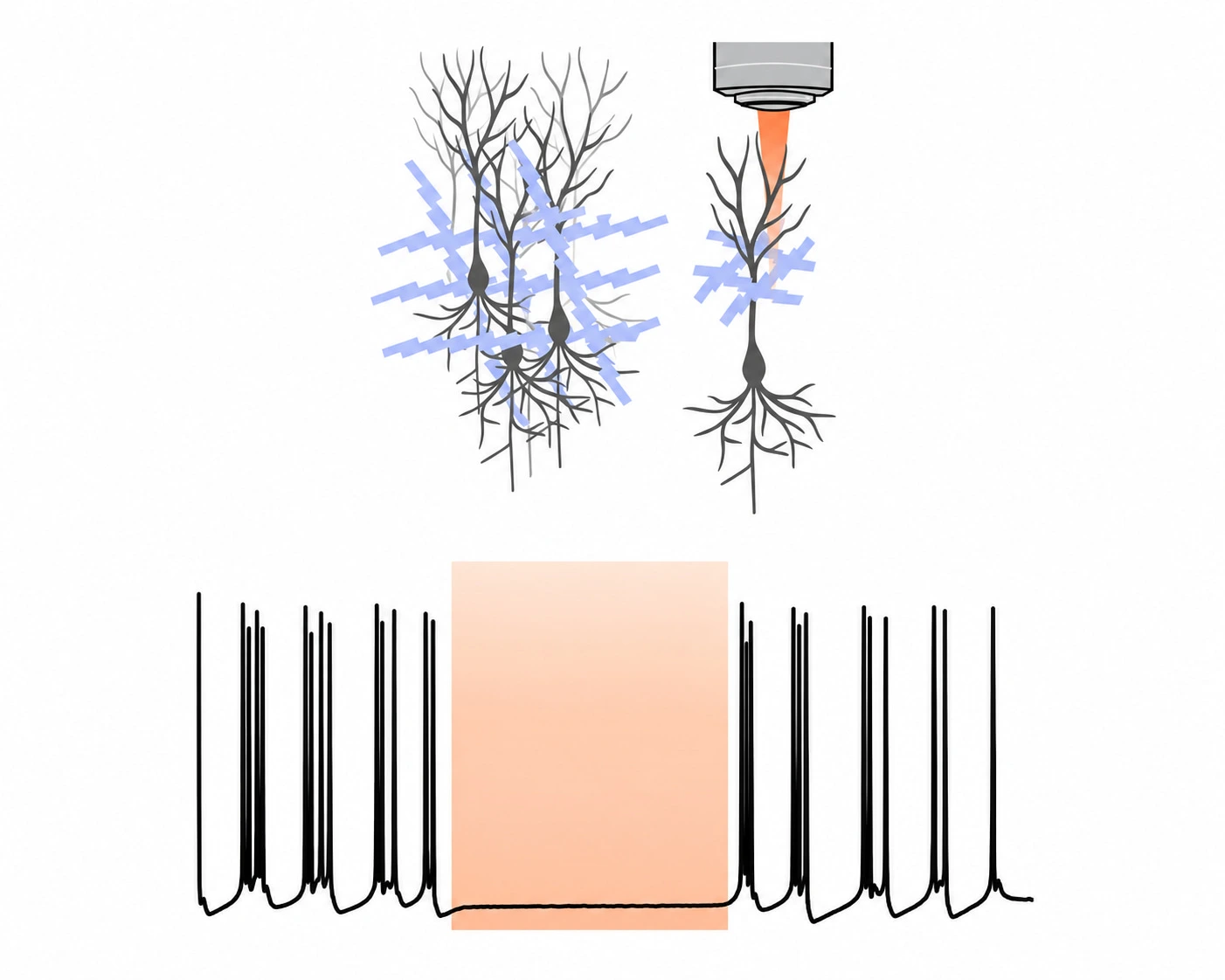
    Schematic from the group's 2026 Science paper: neurons wrapped in the soft, tissue-like n-PBDF electrode stop firing while near-infrared light is on and fire again afterwards
    • Excitability of neurons: how the optical, electrical, ionic and chemical properties of a material affect membrane potential and the generation and propagation of action potentials, and quantitative links between material properties and neuronal responses.
    • Synaptic plasticity and its link to the dynamic response of materials: whether material-mediated modulation of neural activity can change the efficiency of synaptic transmission and activity-dependent plasticity.
    • Neural circuits and how material-mediated neuromodulation affects their activity and functional organisation, including how reversible and lasting the effects are and how they relate to learning-related behaviour.

    Together, these explore the mechanisms and rules that lead from material properties to changes in neural function.

  • Adaptive neuroelectronics and neurotherapy

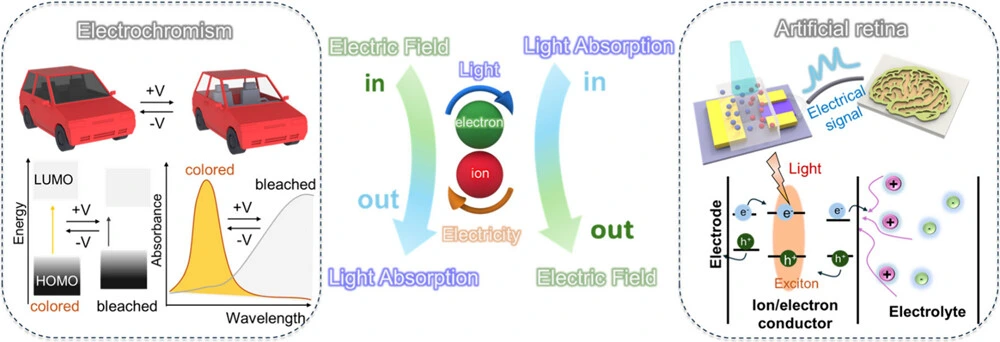
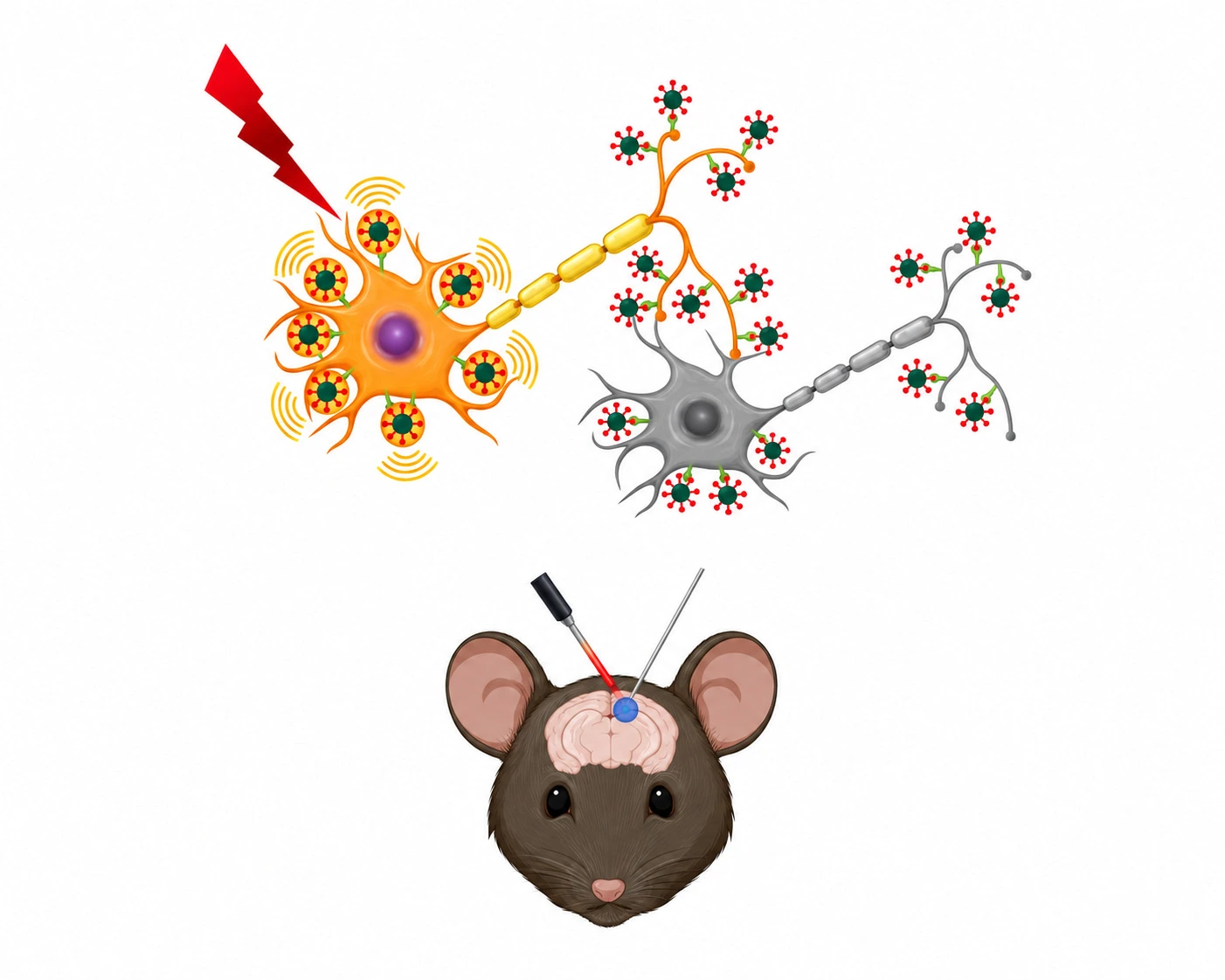
    Schematic from a 2021 Matter paper co-authored by the group: near-infrared light acting through photoacoustic nanotransducers on a neuron evokes an action potential that travels on to the next neuron; below, a mouse brain with recording electrodes
    • Activity sensing methods for recording bioelectronic signals under physiological conditions, characterising the material-tissue interface and taking synchronised multimodal measurements.
    • State recognition methods that relate neural activity to physiological state, and state indicators that reflect changes in the target neural activity.
    • Feedback modulation that combines signal recording, state recognition, the setting of modulation parameters and the evaluation of intervention effects, towards neural-electronic systems that adjust their modulation strategy to the physiological state.

    Research starts with scenarios that have measurable electrophysiological markers, such as epilepsy-related abnormal neural activity, and then evaluates whether it can be extended to Parkinson's disease and other models of neural dysfunction; functional improvement in disease models is a research goal to be verified by experiment, not a presumed clinical outcome.

  • Related functional materials and devices: neuromorphic sensing

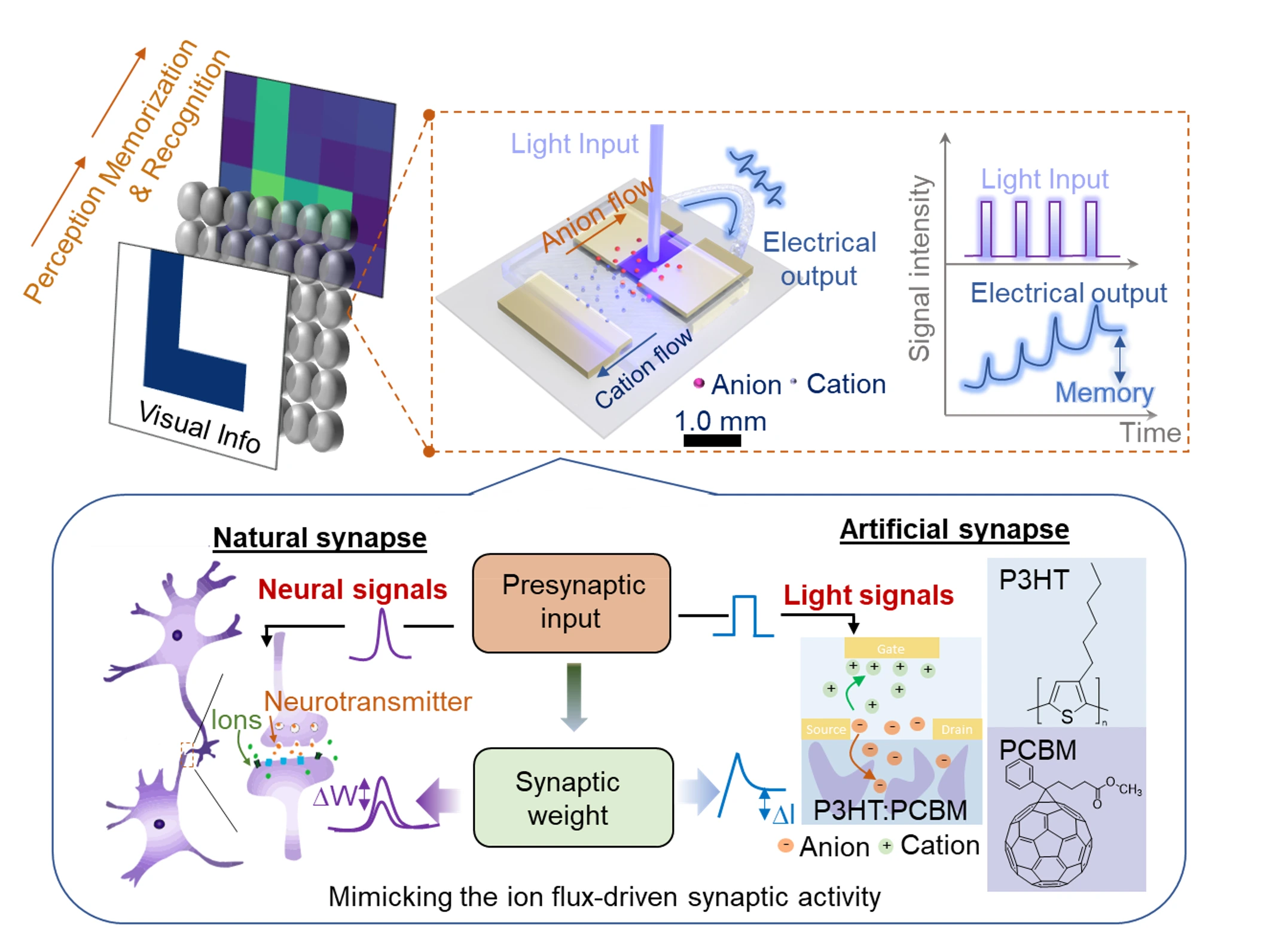
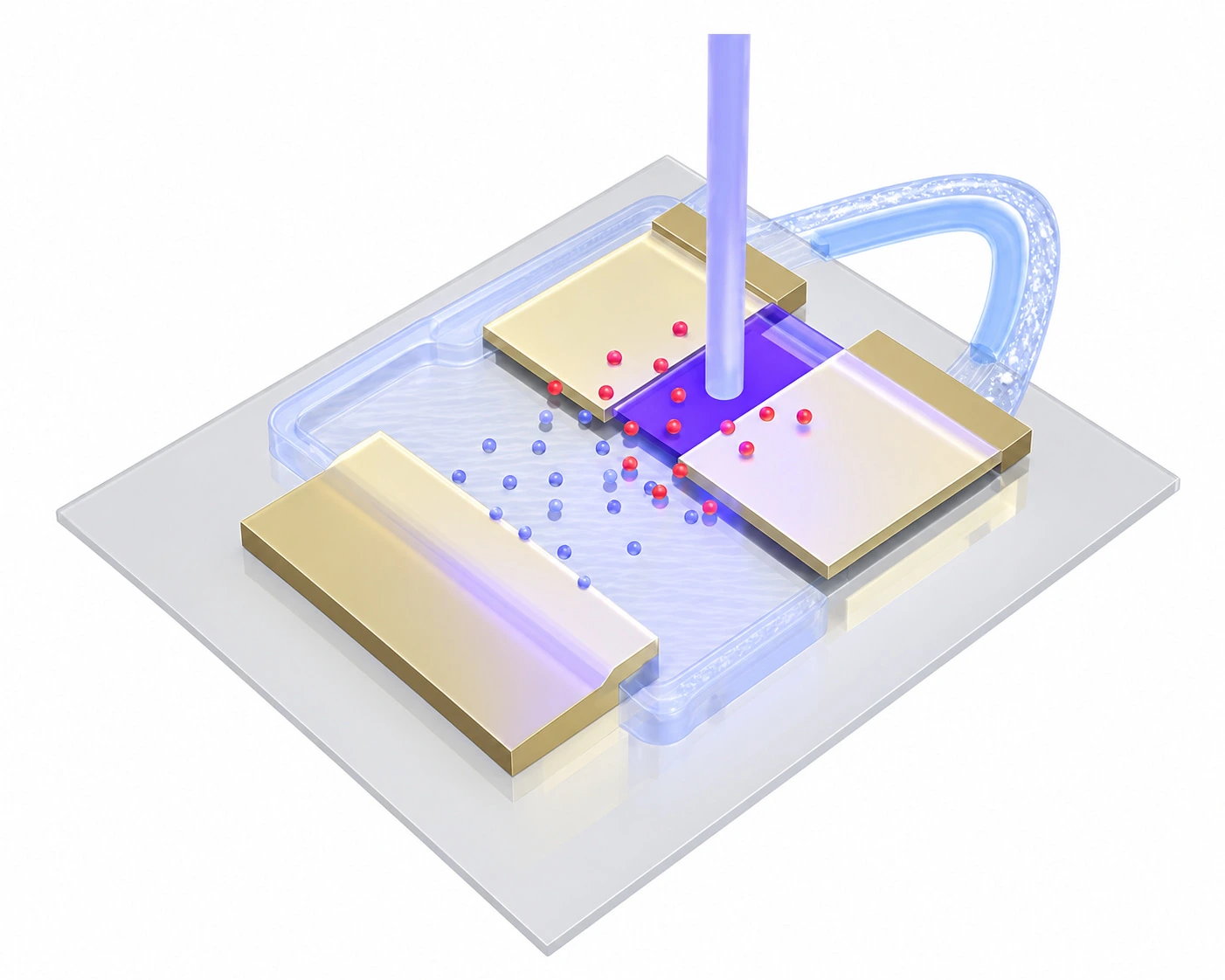
    Schematic from the group's 2023 Nature Photonics paper: an organic optoelectronic synapse in which a beam of light drives anion and cation flow between the electrodes
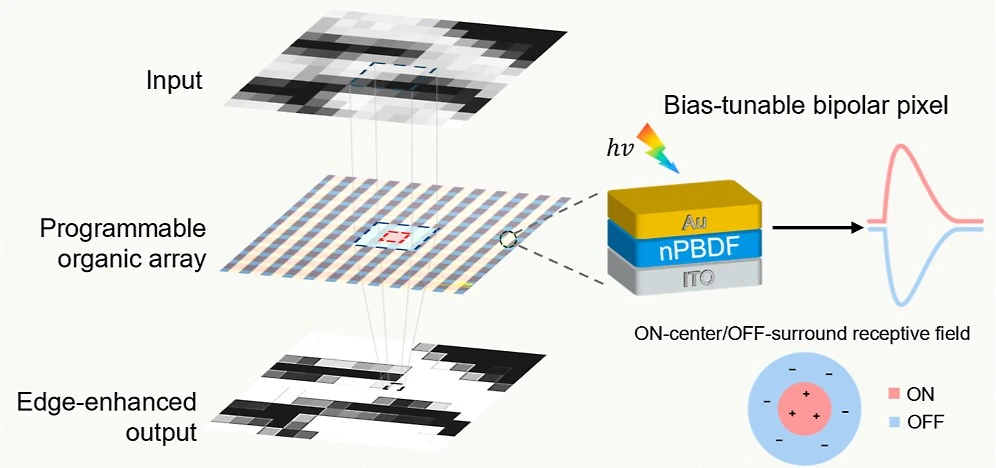
    • Artificial retina and other forms of neuromorphic perception, building on the center's work on mixed ionic-electronic conductors, organic optoelectronic materials and electrochemical devices.
    • In-sensor computing in vision sensors that sense and compute in one device, combining perception, processing and memory.
    • Photo-responsive devices and the potential of these materials for photo-response and information processing.

    The artificial retina and in-sensor vision sensors are pursued as an extension of these material and device capabilities, not as a core task of the initial neuromodulation program.

Research at CLEAN

Experimental Platforms

CLEAN carries out cross-scale, coordinated measurement and modulation research along the chain of electronic materials, electrochemistry and the nervous system. It is building five interlocking experimental platforms that together establish a chain of evidence from material formation and action, through changes in cell physiology and neural circuit responses, to behavioural outcomes.

  • Materials and bioelectronic characterisation

    • Materials synthesis
    • Structure and morphology
    • Electrochemical testing
    • Stability in physiological conditions
  • Chemical delivery and targeting

    • Where the material forms
    • How it forms
    • Which cells or tissues it acts on
  • Multimodal cell physiology

    • Patch clamp
    • Optical imaging
    • Ion dynamics and redox state
  • Neural circuits and systems

    • Neural electrophysiology recording and activity imaging
    • Neural signal analysis
    • Feedback control
  • Behaviour and causal validation

    • Behavioural evaluation
    • Causal validation
    • Preclinical research

What CLEAN Sets Out to Achieve

  • Fundamental breakthroughs

    • Programmable neuro-electronic interfaces
    • Electron and ion coupled materials
    • Co-operative optical, electrical and chemical modulation
    • Switchable excitation and inhibition
  • Exploring the potential for intervention in neurological disease

    • Monitoring of and intervention in abnormal neural activity
    • Modulation effect, reversibility, stability and potential safety risks
    • An experimental basis for later clinical translation research
  • Intelligent sensing systems and cross-disciplinary demonstrations

    • Artificial retina
    • Neuromorphic sensing
    • Brain-inspired vision

People at CLEAN

Selected Publications

Join CLEAN

Building on Zhejiang University's multidisciplinary research platforms, CLEAN is committed to the deep integration of chemistry, materials, electronics, the life sciences and medicine, and to exploring original new bioelectronic technologies with potential for clinical translation. CLEAN looks forward to exploring the boundary between life and electronics with you.

Research directions include:

  • Living electronics and in vivo in situ polymerisation
  • Conducting polymers and bioelectronic materials
  • Neuroelectronics and neuromodulation
  • Cardiac electronics and the intrinsic cardiac nervous system
  • Organic electrochemical transistors and neuromorphic devices
  • Adaptive bioelectronic systems
  • Bioelectronic devices and clinical translation

Who we’re looking for

CLEAN values professional expertise, but a researcher's character matters more than the techniques already mastered.

Integrity

Character first: Be a person of integrity and warmth before anything else.

Be honest with data and take responsibility for your results, neither avoiding failure nor changing how you interpret the data to reach the result you hoped for. Research is built first of all on integrity.

A genuine interest in science

Be interested in research itself, not only in research as a job.

When a result surprises you, you want to know why.

When a question has no answer yet, you are willing to keep exploring.

We value curiosity, not only the knowledge you already have.

Have a direction

Hold a general mission or goal in life.

Thinking for yourself

Ask questions, not only carry out experiments.

Whatever your role, understand what you are doing and why you are doing it.

Put forward your own ideas for improving experiments and research directions.

Communication and collaboration

CLEAN is a highly interdisciplinary team, so communication matters.

Explain your ideas clearly, and listen carefully to the views of others.

Work independently, and work as part of a team.

Share your own experience, and learn from others.

Real interdisciplinary research does not simply bring people from different fields together; it means understanding problems together and solving them together.

Resilience

Be willing to embrace risk and uncertainty.

Original research rarely goes smoothly.

Persevere through setbacks, analyse what went wrong, think again, but, when necessary, also know when to let go.

Positions

CLEAN is an interdisciplinary research center, so we do not expect everyone to have exactly the same background: people from chemistry, materials science, electronic engineering, biomedicine, neuroscience and artificial intelligence can each approach the same problem from a different angle here.

  • Faculty

    For high-level talent and research professors of the Hundred Talents Program. In line with the goals of each stage, the center will recruit or develop interdisciplinary researchers with backgrounds in neural electrophysiology, systems neuroscience, neural signal analysis and preclinical research.

    The university provides salary, start-up research funding and other support according to the circumstances of each appointment and the relevant policies; appointments depend on university approval and the applicable recruitment procedures.

  • Postdoctoral researchers

    For outstanding early-career researchers who have received or are about to receive a doctorate. Postdocs carry out independent research while advancing major projects together with the team, and are encouraged to develop their own research direction over time.

    We especially welcome applicants with backgrounds in organic chemistry, polymer chemistry, materials science, organic electronics, bioelectronics, electrochemistry, neuroscience, biomedical engineering, electronic engineering and related fields. Experience with conducting polymers, organic synthesis, polymer synthesis, electrochemistry, device fabrication, biological experiments or neuroscience research is an advantage.

    Prof. Mei's research group is also recruiting postdoctoral researchers, with a focus on organic synthesis, conjugated polymers, and electrochemical materials and devices.

  • Full-time research scientists

    For researchers with substantial research experience who want a long-term career in research. Full-time research scientists take on the design and implementation of important research projects, build stable technical and research expertise in one direction, and can gradually take on the roles of project leader, topic leader or core team member.

    Their research tasks centre on the preparation and characterisation of living electronic materials, photo-electrochemistry and cell physiology experiments, neural signal acquisition and analysis, neural circuit validation and the related data processing.

    We especially welcome outstanding Ph.D. holders who can do independent research, early-career researchers with postdoctoral experience, researchers with expertise in materials, chemistry, devices, bioelectronics or neuroscience, and researchers who want to pursue original interdisciplinary research over the long term.

  • Research assistants

    For young people with a bachelor's or master's degree who want to enter research. Research assistants take part in materials synthesis, device fabrication, characterisation, biological experiments and the daily research work of the laboratory.

    We do not expect research assistants to master every experimental skill from the start. If you are careful, reliable and willing to learn, and genuinely interested in research, you are welcome to join us.

    Research assistants who do well and wish to continue their studies are encouraged to go on to a doctorate or to become long-term research staff.

  • Laboratory technical staff

    Laboratory technical staff support the center's research team: they keep the experimental platforms running, support the building of the key shared platforms, and help make large instruments openly shared and usable across teams.

  • Doctoral students

    Admission through the Department of Polymer Science and Engineering and the Institute of Fundamental and Transdisciplinary Research of Zhejiang University.

    The center trains graduate students around real interdisciplinary scientific questions, so that they can work across materials synthesis, electron and ion transport, device characterisation and the validation of physiological function; shared projects, joint supervision and standardised experimental platforms build a team that combines clear disciplinary expertise with the ability to collaborate across scales.

    Apply through Zhejiang University's formal admissions procedures.

How to apply

Please send the following to Prof. Jianguo Mei's email address, with "Application to CLEAN" and the type of position you are applying for in the subject line.

Curriculum vitae (CV)
Education, research experience and a list of publications.
Research experience and interests
A brief introduction to your research experience and research interests.
References
The contact details of at least two referees.

Location: Zijingang Campus, Zhejiang University (Hangzhou).

Salary: according to Zhejiang University's talent management policies.