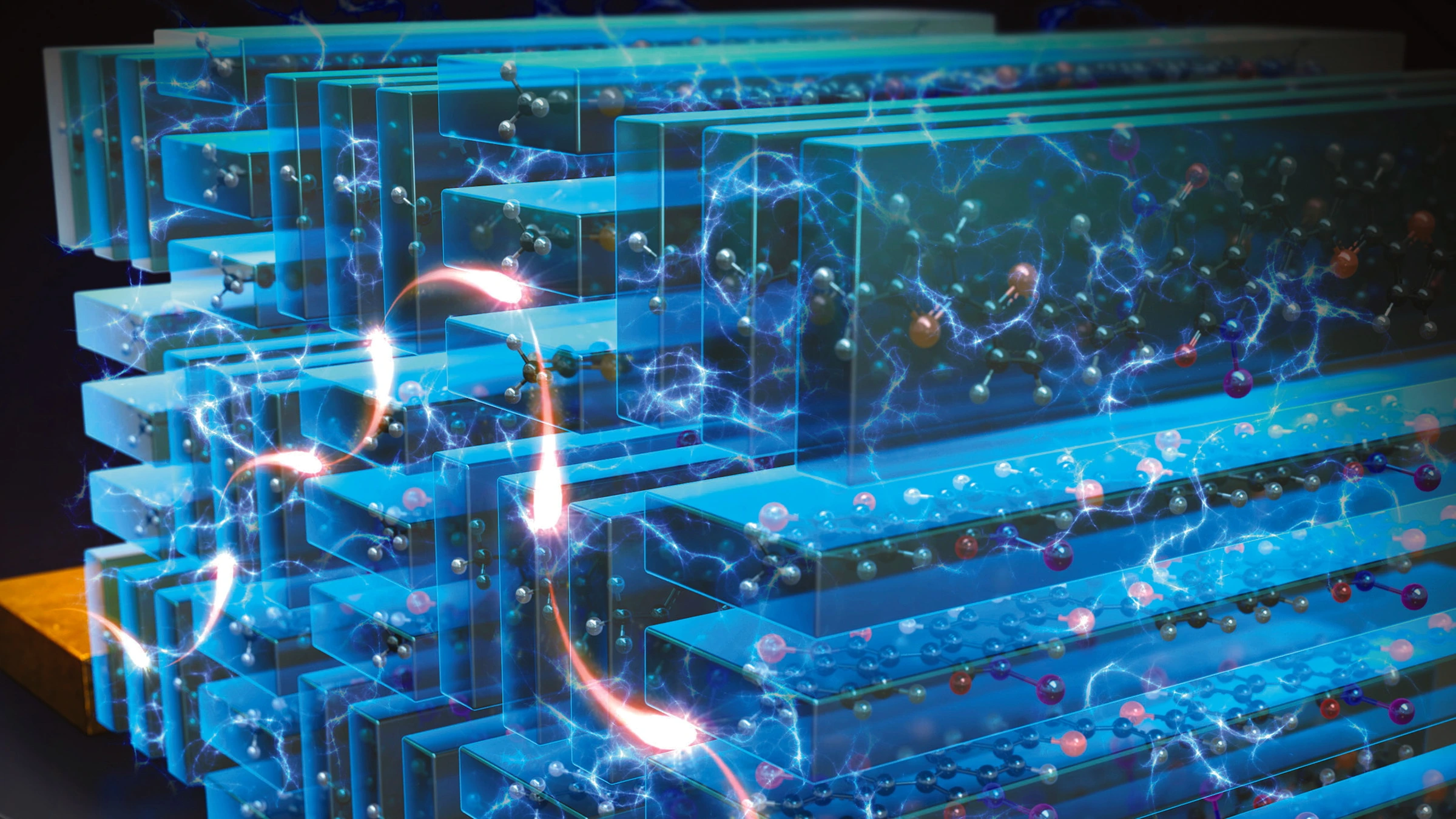
Molecular Engineering is where our materials begin. We design and synthesise conjugated small molecules and polymers, develop new polymerisation methods and processing routes, and follow each material from its chemical structure through processing and thin-film morphology to the mechanical, optical and electronic properties it finally shows.
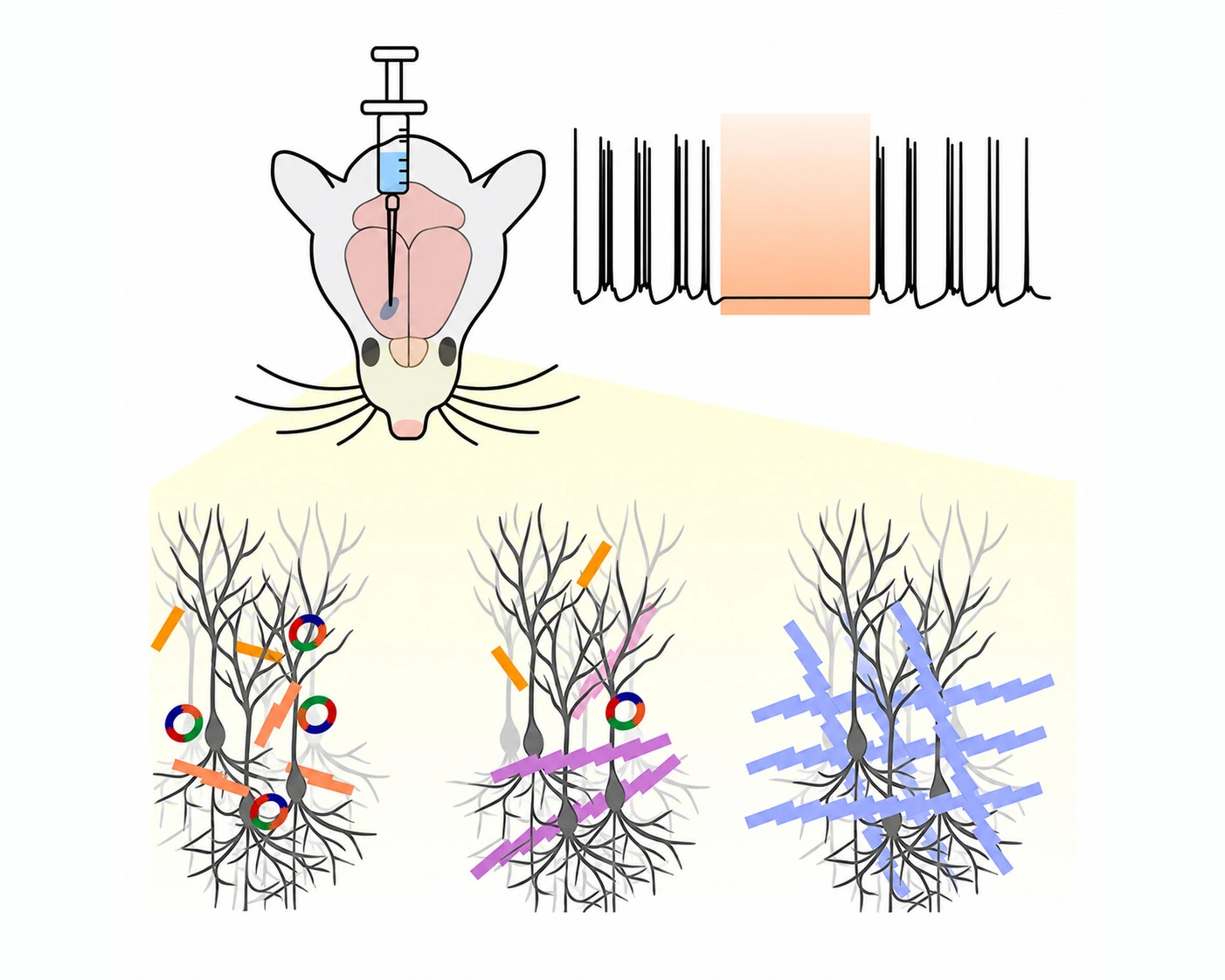
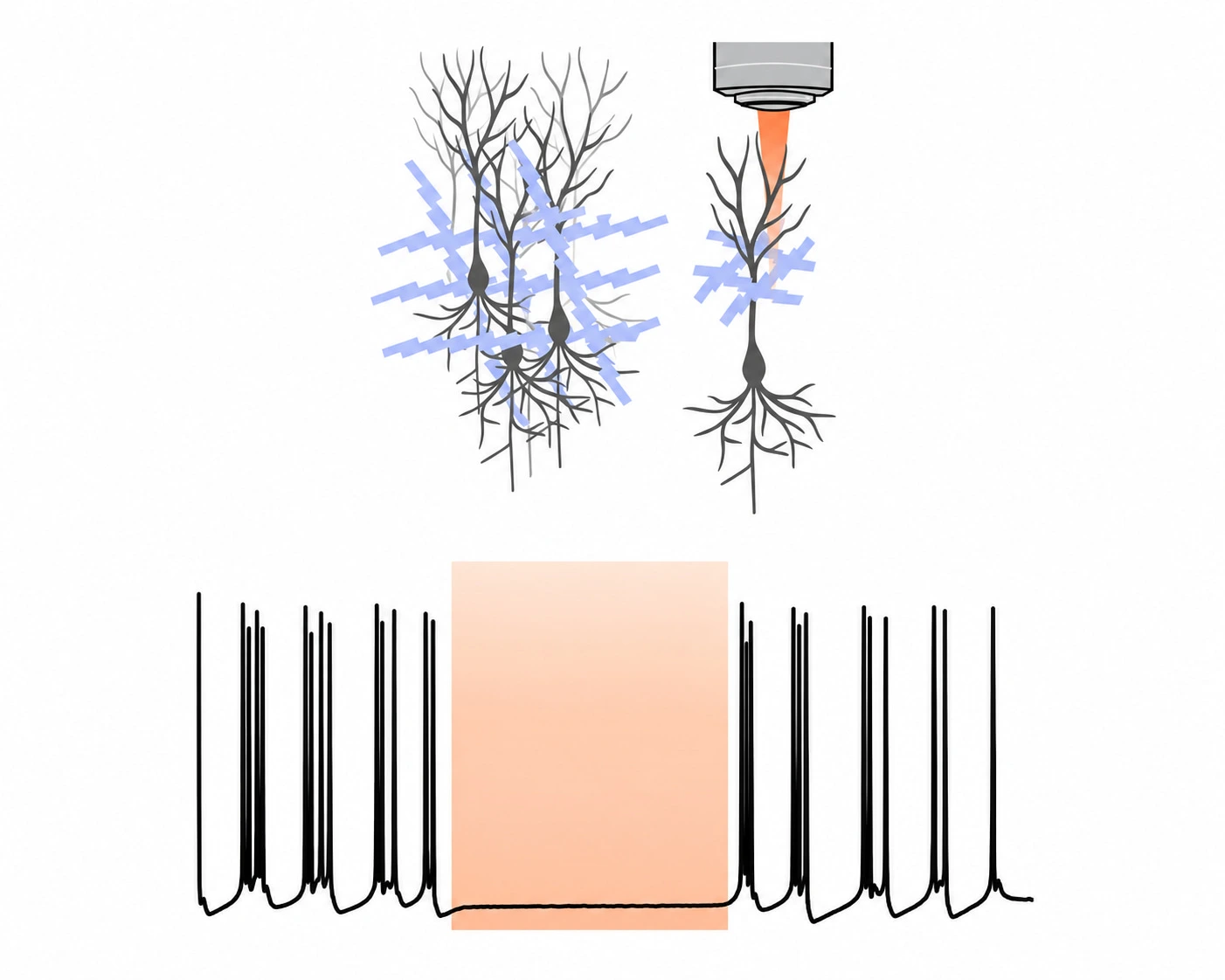
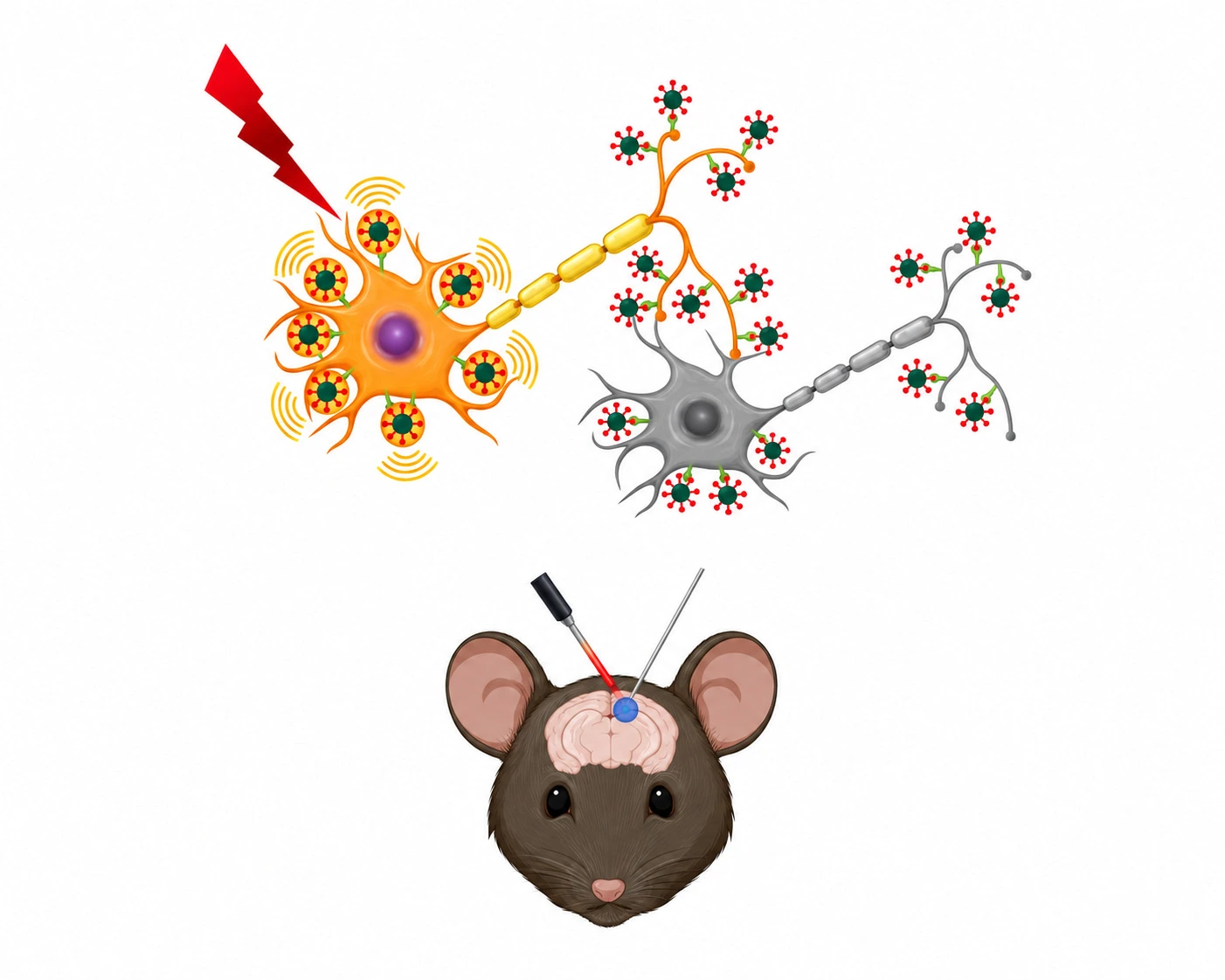
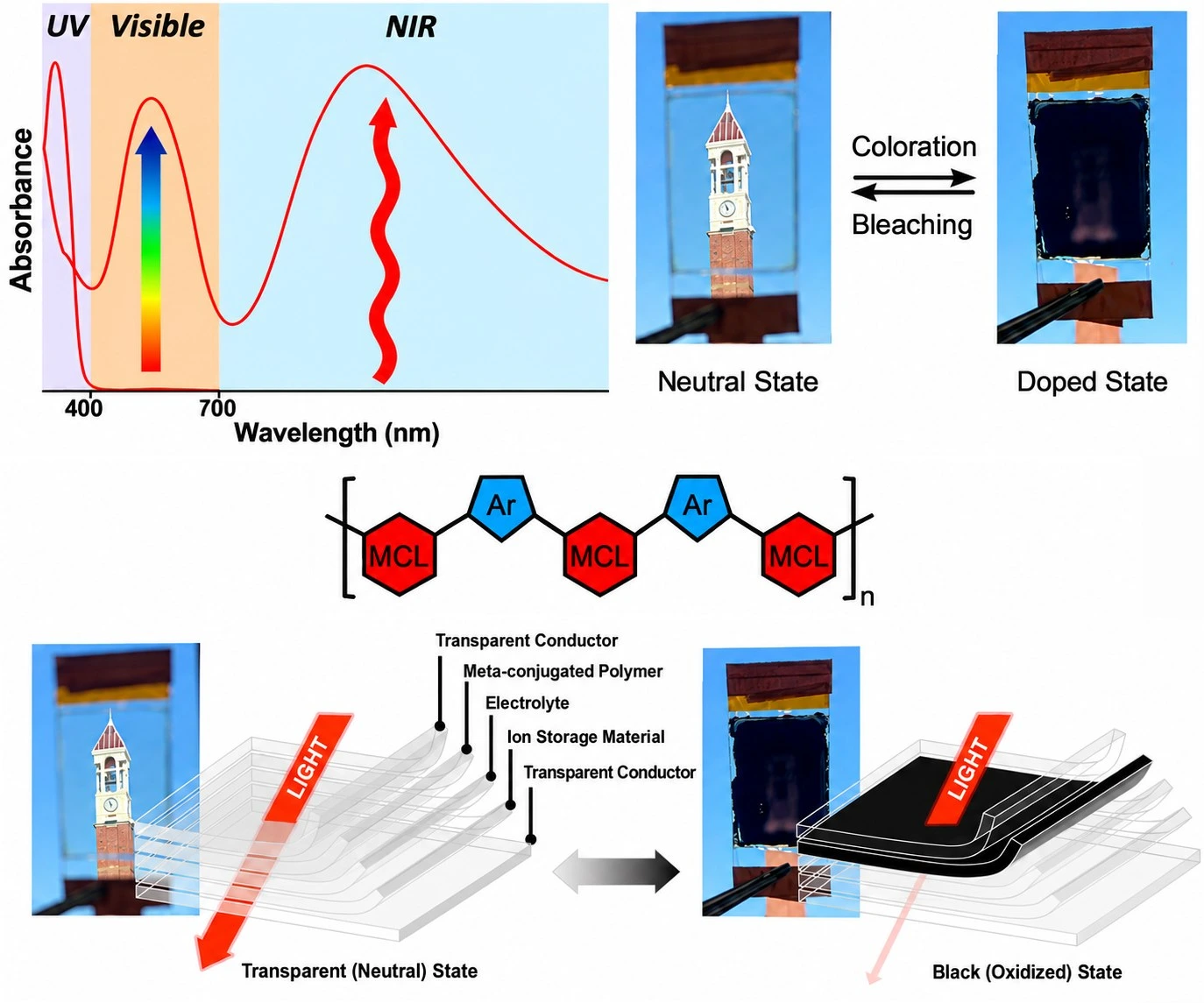
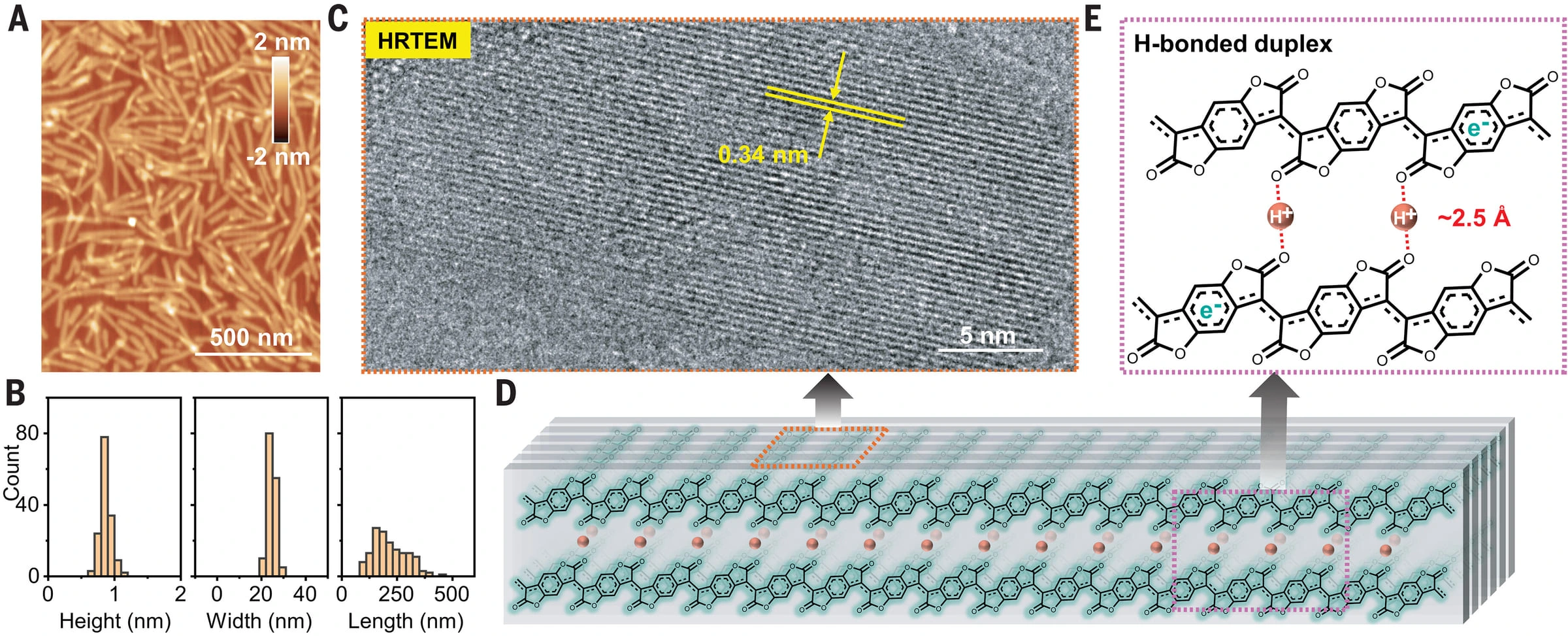
Our flagship material is n-PBDF, an n-doped transparent organic conductor discovered independently in our group. n-type conducting polymers have long been held back by low conductivity, instability in air and doping that destroys structural order; n-PBDF is the first to combine metal-level conductivity, air stability, solution processability and visible-light transparency above 80 %, and its performance rivals the indium-tin-oxide (ITO) used in phone screens, displays and solar cells. Around it we have built a scalable synthesis, an understanding of its doping mechanism, in which polymerisation, doping and ordering happen in a single step, and ways to control its structure, and we discovered polymerisation-driven spontaneous assembly (PSA), so that doping drives order instead of breaking it. n-PBDF is now a platform for transparent electrodes, electrochemical transistors, electrochromics, smart windows, transparent heaters and flexible solid-state cooling, and it is the material that living electronics grows in vivo.
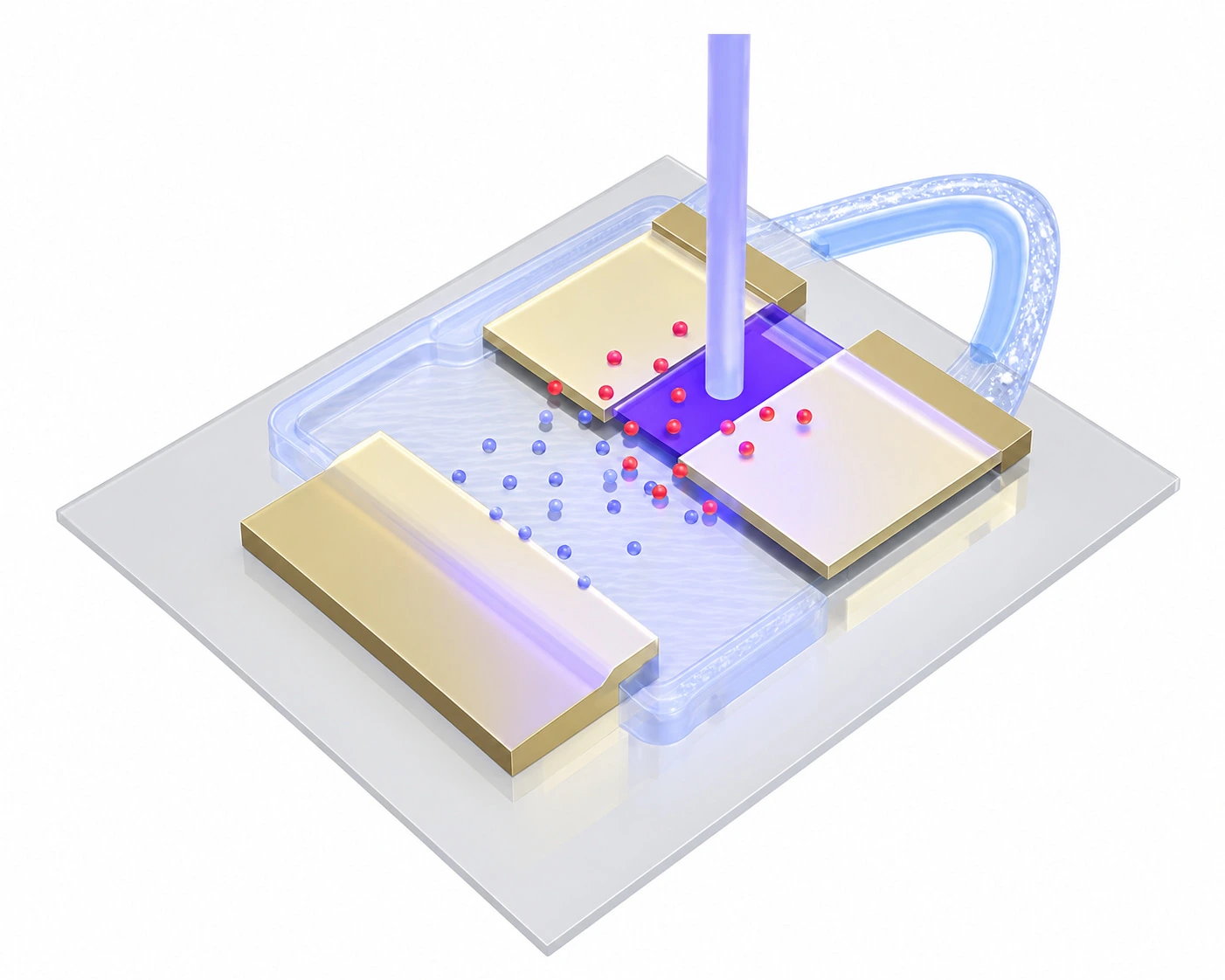
We prove our materials in devices, chiefly organic field-effect transistors (OFETs), organic electrochromic devices (OECDs) and organic electrochemical transistors (OECTs), and we couple electrical, spectroscopic and morphological measurements to learn how structure sets function. The same approach opened high-temperature organic electronics, a research direction we proposed and developed systematically. Electronic devices normally lose their function as they heat up; by uncovering how charge transport and structural stability behave under heat, and by blending polymers, we realised all-plastic organic transistors that operate stably at 220 °C (Science 2018, 362, 1131–1134), taking organic electronics into extreme environments such as engines, spacecraft and downhole sensing.